Top Benefits of Outsourcing Payroll Services in Bangalore Curated For Startup Founders
Most startups don’t fail because of bad ideas.
They struggle because founders end up spending time fixing things that should run smoothly, like payroll.
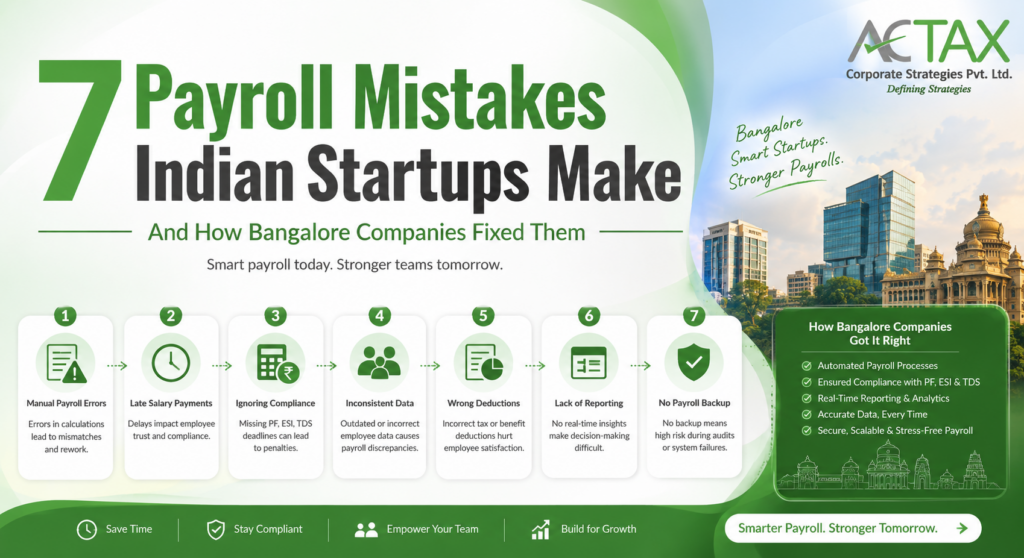
Imagine a growing Bangalore startup with 15-20 employees. Salary day is near. One PF number is wrong. A filing deadline is missed. A tax notice lands in the inbox. Suddenly, payroll is no longer “just salary.” It becomes compliance, calculations, deadlines, and stress.
In Bangalore’s startup scene, payroll is more than salary credits. It’s tax deductions, compliance, filings, deadlines, and data security. Miss one step, and it becomes a headache.
In this blog, we’ll go over the benefits of payroll outsourcing in Bangalore and how it can help startups save time, money, and remain committed to their expansion.
What Does Payroll Outsourcing Mean in Bangalore and Why the Benefits Matter?
When people talk about the benefits of payroll outsourcing in Bangalore, it helps to know what payroll outsourcing really means in real life.
When a startup hires a third-party payroll service provider (a company that specializes in HR and payroll) to handle all salary-related tasks, this is called payroll outsourcing. This includes calculating the wages, deducting taxes, disbursing salaries, generating payslips, filing statutory contributions (like PF, ESI), tax filings, producing tax documents, and managing employee benefits.
“Outsourcing payroll helped us shift focus back to our product roadmap. We went from 12 hours/month on compliance to just 1 hour.”
– Co-founder, SaaS startup in Bangalore
The market for outsourcing payroll in India is growing quickly. By 2025, it will be worth $359.2 million, and by 2034, it will be worth $592.1 million, with a CAGR of about 5.7%.
The Big Benefits of Payroll Outsourcing for Bangalore Startups
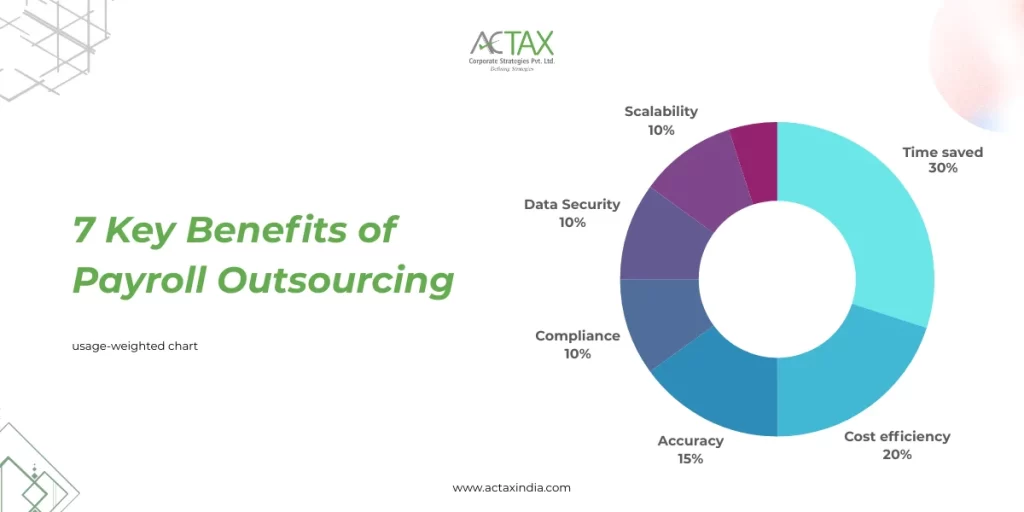
1. Payroll Outsourcing Saves Time & Free Founders From Repetitive Admin Work
When you outsource payroll, your team doesn’t have to do the same things every month, like figuring out salaries, making deductions, sending out payslips, filing taxes, and making bank transfers.
Paybooks recently wrote that many Indian companies save a lot of time by automating and outsourcing the regular payroll process. This frees up the HR and management to spend more time on strategic business work.
According to ADP India, global payroll outsourcing allows businesses to focus on growth, product development, and sales rather than administrative tasks.
2. It Reduce Costs vs Maintaining an In-House Payroll Team
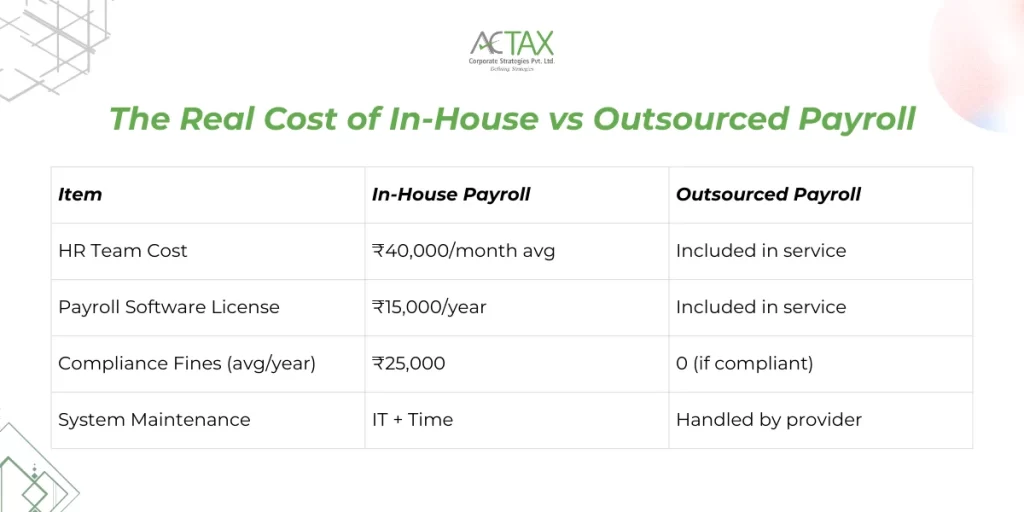
Handling payroll in-house means hiring or training HR, getting software licenses, maintaining systems, and staying compliant. When you outsource, you can pay for these things as needed instead of having to pay for them no matter what. A lot of businesses say they save money by not having a full payroll team or paying for software updates.
In some cases, having another company do payments can cut overhead costs by 60% to 70% compared to doing it in-house.
3. Improve Accuracy & Avoid Expensive Payroll Errors
Payroll entails many complex calculations, gross and net salary, allowances, overtime, taxes, statutory deductions (like PF, ESI), bonuses, and reimbursements. Mistakes are easy if done manually.
Outsourcing providers use automated systems and experienced staff to ensure accuracy. This reduces the risk of under- or over-payment, errors in deductions, and late salary.
Reliable payroll builds trust among employees and avoids internal dissatisfaction or compliance-related problems.
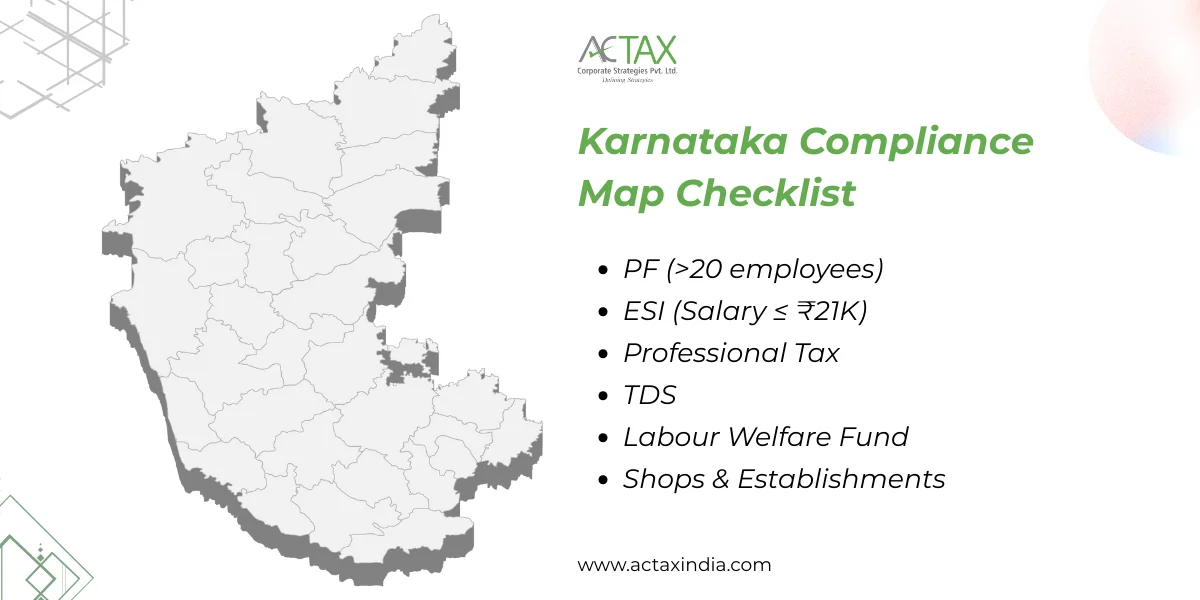
4. Stay Fully Compliant With Karnataka & Central Laws
In India, there are too many regulations around labour laws, tax, statutory contributions (PF, ESI), minimum wages, TDS, etc., which change from time to time.
Therefore, to avoid fines, audit failures, or legal issues, outsource your payroll processing to a company that keeps track of these changes.
Related Resource: Complete Payroll Compliance Checklist for Indian Startups
5. Strengthen Data Security Through Enterprise – Grade Systems
Payroll data includes very sensitive information: salaries, bank account details, tax information, etc. For many small startups, building secure systems for payroll data is hard.
Many payroll providers use ISO-certified, encrypted, cloud-based systems that ensure confidentiality. This reduces the risk of data leaks, unauthorised access, or internal misuse, providing peace of mind.
6. Scale Effortlessly As You Grow
Startups don’t need time to grow. You can hire a lot of people in a short amount of time. In these situations, it gets hard to handle payroll in-house.
So, outsourced payroll services can get bigger or smaller depending on your business. You don’t have to hire more people or resources because it can handle different types of employees and salary structures.
7. Transparent Reporting & Better Employee Experience
Many payroll companies offer tools, dashboards, reports, and employee portals that are useful for both employers and employees. Employees can see their pay stubs, tax forms, and benefits, while employers get reports on things like cost per employee, payroll costs, compliance, and data that is ready for an audit.
This kind of transparency helps people trust each other and makes accounting or audits easier.
8. Manage Employee Perks Without Extra HR Load
Managing employee benefits can quickly become another task on your HR team’s plate. Payroll outsourcing can help by handling allowances, reimbursements, deductions, bonuses, and other employee perks as part of the regular payroll process. This keeps payments accurate and on time while reducing the day-to-day administrative work for your HR team.
The founders who get burned aren’t usually the ones who don’t know PF and ESI exist they’re the ones who register late, miss a contribution deadline, or misjudge which threshold applies to them. Outsourcing removes that guesswork entirely. find out more>>
We Handle Payroll of Your Company Effortlessly
With expertise in Bangalore specific law coverage & compliances, we offer scalable payroll services for 5 to 500 people teams!
How Startups Can Maximize the Benefits of Payroll Outsourcing in Bangalore?
If you decide to outsource, it’s important to choose wisely to get the full benefits of payroll outsourcing in Bangalore.
A founder-ready checklist before Hiring A Payroll Service Provider to Their Startup
- Make sure the provider knows the laws and rules that apply in Karnataka and India.
- They should have payroll software that runs on its own, safe data management, and encryption.
- Prices should be reasonable, and the model should be able to grow with you. If you’re a small startup, don’t use services that are meant for big businesses.
- They should do more than just process salaries. They should also provide transparency, reporting, payslips, tax documents, and support for employees (self-service portals, questions, and statutory filings).
- A provider who can work with different types of workers (full-time, part-time, and freelance) and changing needs.
Bangalore Startup Compliance Snapshot (2026)
Your payroll provider should handle:
Compliance Requirement | Applies to | Managed By Outsourcing |
PF (Employee Provident Fund) | >20 employees | Yes |
ESI (Employee State Insurance) | Salary ≤ ₹21,000 | Yes |
Karnataka Professional Tax | All employees | Yes |
Labour Welfare Fund | Karnataka employees | Yes |
TDS (Income Tax) | All salaried employees | Yes |
Shops & Establishments Act | All Bangalore offices | Yes |
What Changes as Your Team Grows: 5, 20, 50, 100+ Employees?
At 5 employees, PF and ESI usually aren’t mandatory yet, so payroll outsourcing mostly saves you time on calculations and payslips. Cross into the 10-20 employee range and ESI registration becomes mandatory (the exact threshold depends on your state and establishment type), which is where most founders first get caught out.
By 50 employees, you’re dealing with PF, ESI, PT, and TDS all running on different monthly cycles this is usually the point where doing it manually stops being realistic.
Past 100, the question isn’t whether to outsource, it’s whether your current provider can still handle the complexity.
A Bangalore Startup's Payroll Compliance Calendar
- Professional Tax (Karnataka): deducted monthly, remitted by the 20th of the following month
- PF: contributions due by the 15th of the following month
- ESI: contributions due by the 15th of the following month
- TDS on salary: deposited monthly, quarterly returns filed via Form 24Q
- Form 16: issued annually by June 15th
Conclusion
Payroll outsourcing isn’t about handing off something you can’t do, it’s about not spending founder hours on something that doesn’t move the business forward. If you’re weighing this for your team, we can walk you through what it actually looks like at your headcount.
Firms like Actax India work quietly in the background, helping businesses run payroll smoothly while founders focus on decisions that actually move the business forward. Sometimes, the smart thing we can do is just let experts take care of things their way.
Ready To Simplify Payroll To Your Startup?
With expertise in Bangalore specific law coverage &V compliances, we offer scalable payroll services for 5 to 500 people teams!
Frequently Asked Questions